

How Spectrophotometers Improve Accuracy in Fruit Maturity Evaluation
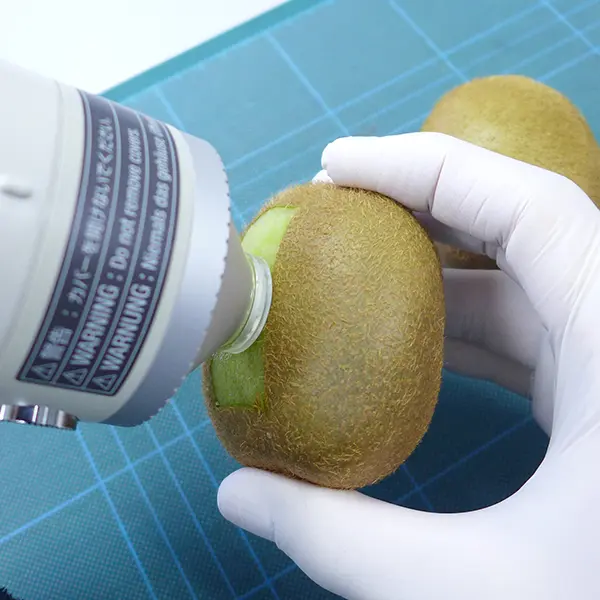
Fruit maturity is a defining factor in determining quality, taste, shelf life, and overall market value. For growers and producers, knowing exactly when to harvest can make the difference between premium produce and avoidable losses. However, achieving consistent and accurate maturity evaluation has always been a challenge, particularly as operations scale and quality expectations become more demanding.
The Limitations of Traditional Assessment Methods
Visual assessment has long been the most widely used approach for evaluating fruit maturity. By observing external characteristics such as color and surface appearance, growers can make quick decisions about harvest readiness. This method is simple, requires minimal tools, and has been relied upon for generations.
However, its simplicity is also its biggest limitation. Visual assessment is inherently subjective, with results influenced by lighting conditions, environmental factors, and individual perception. Even experienced workers may interpret the same fruit differently, leading to inconsistencies in decision-making. As production volumes increase and multiple teams become involved, maintaining uniform standards becomes increasingly difficult. What begins as a practical approach can quickly turn into a source of variability that affects overall product quality.
Moving Toward Objective Measurement with Color Analysis
To overcome these limitations, the industry is shifting toward objective measurement methods that replace subjective judgment with quantifiable data. Spectrophotometers play a key role in this transition by measuring color using standardized parameters such as L*, a*, and b* values.
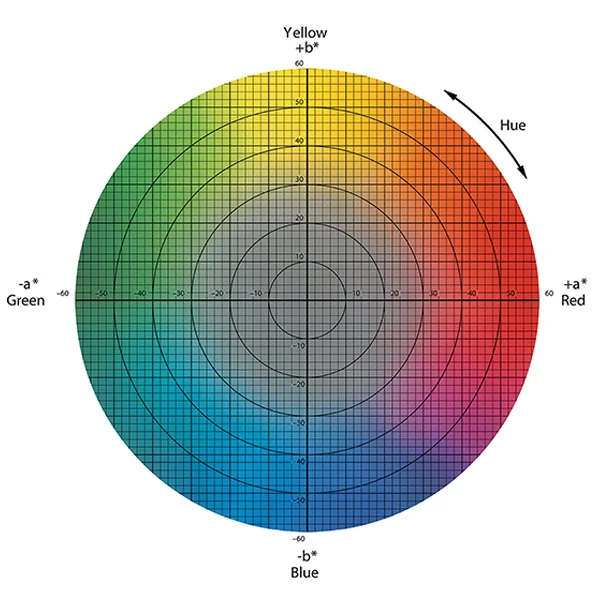
The CIE L*a*b* color space is designed to represent human color perception in a uniform, numerical format, allowing even small color differences to be measured consistently. In this system, L* represents lightness on a scale from 0 to 100, where 0 corresponds to black and 100 to white. The a* axis represents the green–red component, with negative values indicating green and positive values indicating red. The b* axis represents the blue–yellow component, where negative values correspond to blue and positive values to yellow.
Together, these three values provide a comprehensive and objective description of color. Because the CIE L*a*b* color space is designed to be perceptually uniform, changes in these values closely reflect how the human eye perceives color differences.
In fruit maturity evaluation, these parameters change in measurable and often predictable ways as ripening progresses. For example, many fruits exhibit increasing a* values as red pigmentation develops. At the same time, the relationship between a* and b* can be used to calculate the hue angle (hab), which provides a clear indication of color transition during ripening.
While this approach provides a strong scientific foundation, achieving consistent and reliable results depends heavily on the use of an appropriate measurement instrument. In practice, several key challenges can affect the accuracy and repeatability of color measurement in fruit maturity evaluation.
One of the primary challenges is measuring curved or uneven fruit surfaces. Unlike flat materials, fruits such as apples, peaches, and grapes present irregular geometries that can make it difficult to obtain stable and accurate readings. Another critical factor is the precise identification and confirmation of the measurement point. Without clear targeting, it becomes difficult to ensure that repeated measurements are taken at the same location, leading to variability in results, especially when monitoring changes over time or across different operators.
Accurate Fruit Maturity Evaluation with the Spectrophotometer CM-17d
The Konica Minolta Spectrophotometer CM-17d is designed specifically to address these challenges. Its optional 3 mm small aperture enables accurate measurement on small, curved, or uneven fruit surfaces, ensuring that geometry does not compromise data quality. At the same time, the built-in electronic viewfinder allows users to clearly confirm and align the measurement point, improving consistency and reducing variability between readings.
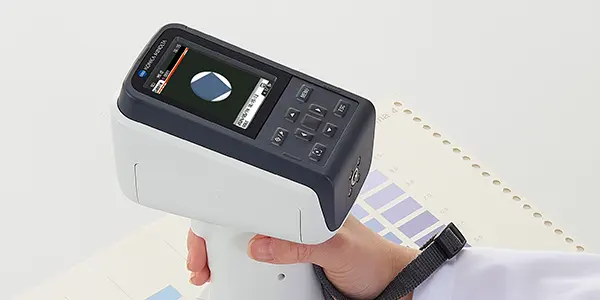
Spectrophotometer CM-17d built-in electronic viewfinder for precise measurement targeting
Building on these capabilities, the Spectrophotometer CM-17d further enhances measurement reliability through high optical stability, delivering excellent repeatability across measurements. This ensures that data remains consistent and dependable, even when evaluating large sample sets. Its lightweight, field-ready design ensures reliable performance in both indoor and outdoor environments, making it well-suited for use across different stages of fruit evaluation, from field assessment to quality control. In addition, its fast measurement speed supports efficient workflows, allowing users to perform high-volume evaluations without sacrificing accuracy.
WATCH VIDEO
Check out how the CM-17d improves fruit maturity evaluation in real-world applications in this flyer.
Interested in how the Spectrophotometer CM-17d can enhance your fruit maturity evaluation? Get in touch for a product demo or expert consultation tailored to your application.