

APHA and Gardner Color Measurement for Petroleum-Derived Liquids
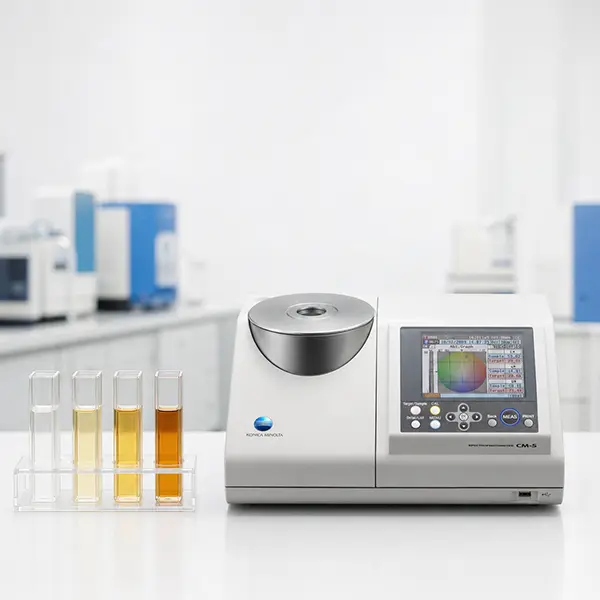
Color is an important quality indicator in petroleum refining, petrochemical processing, lubricant production, and specialty chemical manufacturing. Unexpected yellowing or darkening may indicate oxidation, contamination, thermal degradation, raw material variation, or changes in production conditions.
For transparent petroleum-derived liquids that are expected to remain within a defined color range, objective measurement provides consistent numerical data for batch comparison, process monitoring, and specification control.
Understanding APHA and Gardner Color Scales
Petroleum-derived liquids can range from nearly colorless to yellow, amber, or dark brown. APHA and Gardner color scales are used to evaluate different ranges of liquid color.
The Platinum-Cobalt scale, commonly referred to as APHA or Hazen, is used for clear liquids with very slight yellow coloration. Lower APHA values indicate a clearer sample, while higher values represent increasing yellowness. APHA measurement may be suitable for clear hydrocarbon solvents, chemical intermediates, specialty oils, additives, and other lightly colored transparent liquids when required by the applicable product, customer, or internal specification.
The Gardner color scale is used for transparent liquids ranging from pale yellow to dark brown. It covers values from Gardner 1 to Gardner 18, with higher values indicating progressively darker coloration. Gardner measurement may be applied to oils, additives, petroleum resins, resin solutions, wax-related materials, and other transparent petroleum-derived liquids with stronger yellow or brown coloration.
Selecting the appropriate scale allows manufacturers to evaluate the sample within a suitable color range and compare the results with established targets or tolerances.
Challenges of Visual Color Evaluation
Traditional APHA and Gardner testing may involve visually comparing a sample against reference standards. While this method can be useful, the result may be influenced by the operator’s color vision, ambient lighting, viewing angle, background, and condition of the sample cell.
Samples that fall between two visual standards can be especially difficult to classify. Different operators or laboratories may assign different values to the same sample, resulting in inconsistent quality decisions. These variations can lead to unnecessary batch investigations, disagreements between suppliers and customers, rejected shipments, and increased quality-control costs.
Objective instrumental measurement helps reduce these variables by evaluating every sample under controlled optical conditions.
Objective APHA and Gardner Measurement with the Konica Minolta CM-5
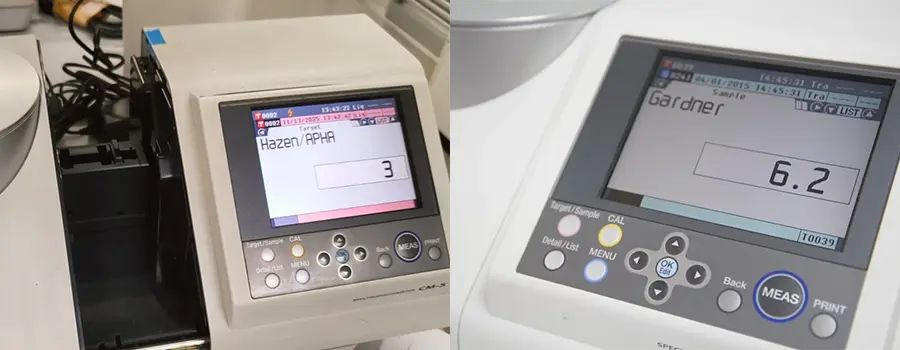
The Konica Minolta CM-5 benchtop spectrophotometer supports the measurement of transparent liquid samples in transmission mode.
Its built-in color indices include APHA and Gardner, allowing laboratories to obtain numerical values without relying entirely on visual comparison. The instrument is suitable for routine testing of transparent petroleum-derived liquids such as solvents, specialty oils, additives, resins, and chemical intermediates.
For Gardner and Hazen/APHA measurement, the optional 10 mm-Wide Cell Measurement Set CM-A207 is recommended for use with the CM-5. This provides a practical setup for routine color measurement of transparent petroleum-derived liquids while helping laboratories maintain consistent measurement conditions across samples.
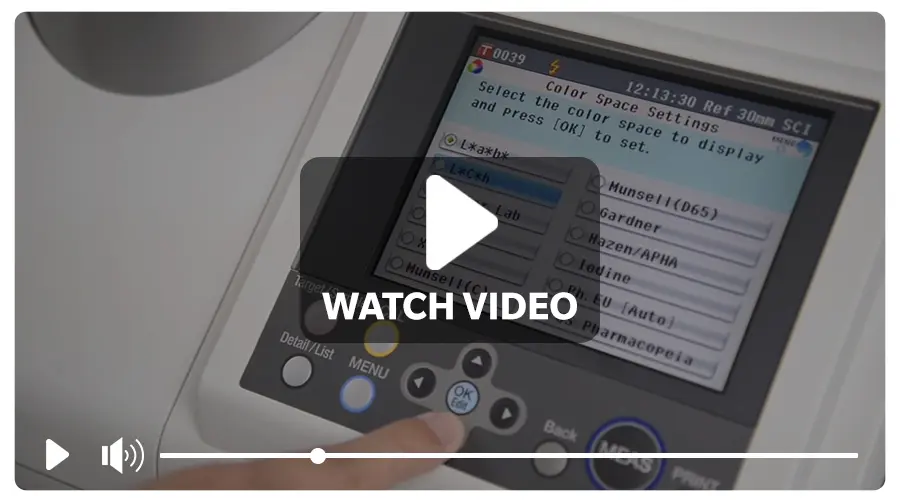
WATCH VIDEO
Spectrophotometer CM-5 Video
Recommended Measurement Procedure
For Gardner or Hazen/APHA measurement with the CM-5 and optional CM-A207 10 mm-Wide Cell Measurement Set, use a clean, scratch-free, commercially available 10 mm-wide optical glass cell with a 10 mm optical path length.
Where another optical path length is required by an applicable test method or validated laboratory procedure, use the specified cell consistently when comparing samples. For very lightly colored liquids, a longer optical path length may be used to increase sensitivity to small color differences, while shorter path lengths are generally more suitable as color intensity increases.
Fill the optical cell sufficiently to cover the measurement area, ensuring that no air bubbles, suspended particles, or sediment interfere with light transmission.
Wipe the outside surfaces of the cell with a clean, lint-free cloth to remove fingerprints, oil residue, dust, and other contaminants.
Insert the cell into the CM-5 transmission measurement chamber and select the appropriate color scale:
- APHA Color Scale for nearly colorless or lightly yellow transparent petroleum-derived liquids
- Gardner Color Scale for transparent liquids ranging from yellow to brown
Recommended instrument settings include:
- Measurement mode: Transmission
- Illuminant: D65
- Observer: 10°
Measurement conditions should follow the applicable laboratory, customer, or test method requirements.
Measure the sample three to five consecutive times. Where required by the laboratory’s quality procedure, remove and reinsert the cell between measurements to check the consistency of sample positioning.
Record the average APHA or Gardner value to improve the reliability of batch comparisons.
Before measurement, complete the required calibration procedures for transmission measurement according to the instrument operating instructions. Use the same cell type and optical path length when comparing samples, and maintain a consistent sample temperature.
The sample preparation method, cell path length, temperature, instrument settings, and measurement conditions should be documented to support traceability and consistent routine testing.
Strengthening Color Quality Control
Consistent APHA and Gardner measurement gives laboratories a clearer basis for comparing batches, monitoring gradual color changes, and identifying unexpected variations before products move to the next stage of production or release.
This is particularly valuable when measurements are carried out by different operators, laboratories, or production locations, as numerical results can be recorded, compared, and communicated more consistently across the quality-control process.
The appropriate color scale and acceptance limits should always follow the relevant product, customer, or internal specification. With built-in APHA and Gardner indices and transmission measurement capability, the Konica Minolta CM-5 supports a more consistent and traceable approach to measuring transparent petroleum-derived liquids.
Looking to improve APHA or Gardner measurement for your petroleum-derived liquids? Contact our color experts to discuss the appropriate sample cell, instrument configuration, and measurement procedure for your application.